SGLang 低延迟模式:内核与运行时优化

SGLang 低延迟模式:内核与运行时优化

SGLang 低延迟模式专为特定模型、硬件和工作负载设计,通过插件框架引入专用内核,避免重复代码并显著降低延迟。

低延迟推理内核

NVIDIA 低延迟内核

在 NVIDIA GPU 上,插件通过重叠依赖内核与通信、针对小批量优化注意力、MoE 和草稿采样,显著降低延迟。相关内核位于 sgl-nvidia-mega 仓库。
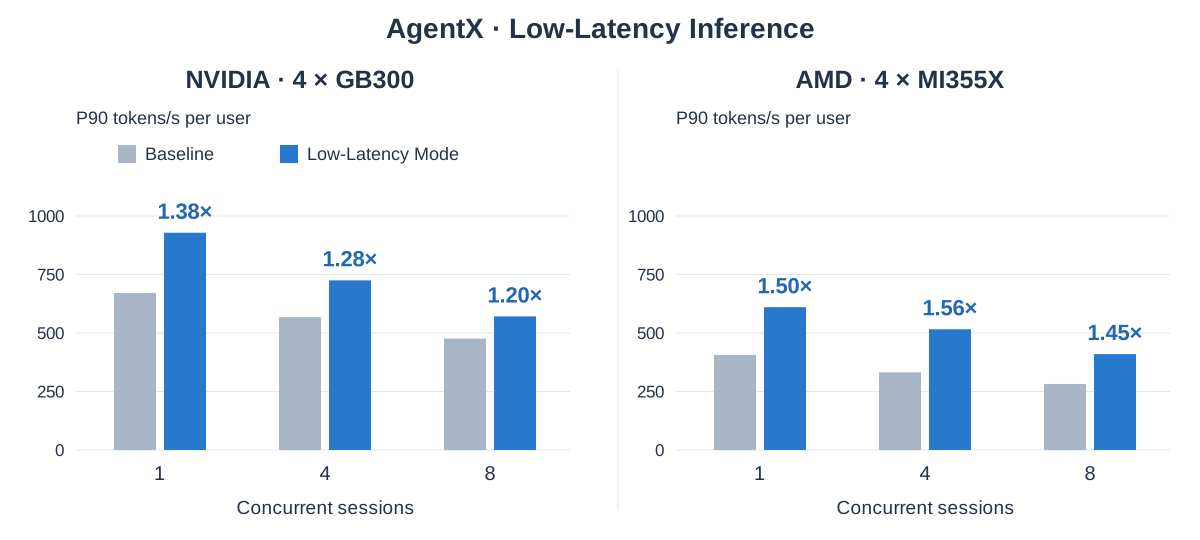
AgentX performance on NVIDIA GB300 and AMD MI355X at 1, 4 and 8 concurrent sessions.

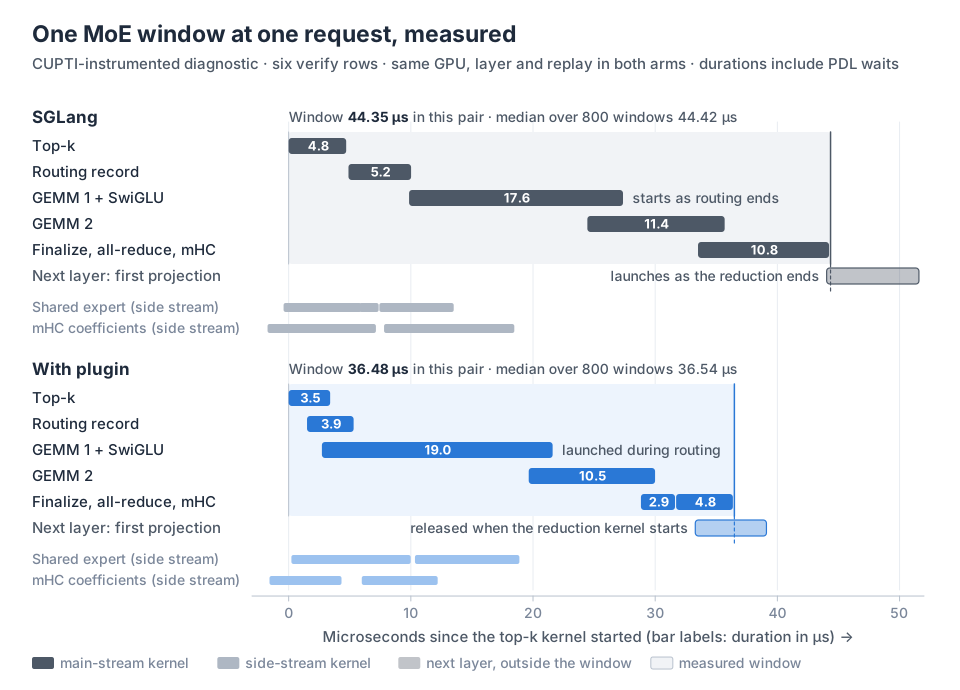
单请求场景下,DSpark 每步验证六个 token 行,插件将解码器层中位延迟从 96.8 µs 降至 68.4 µs,主要通过提前启动下一内核和跨 GPU 通信重叠实现。

低延迟专用优化

1. 使用 PDL 在输入就绪前启动下一内核;2. 将投影输出从 GEMM 尾声直接发布至 NVLink;3. 在路由完成前启动专家 GEMM;4. 将草稿采样合并为单内核。
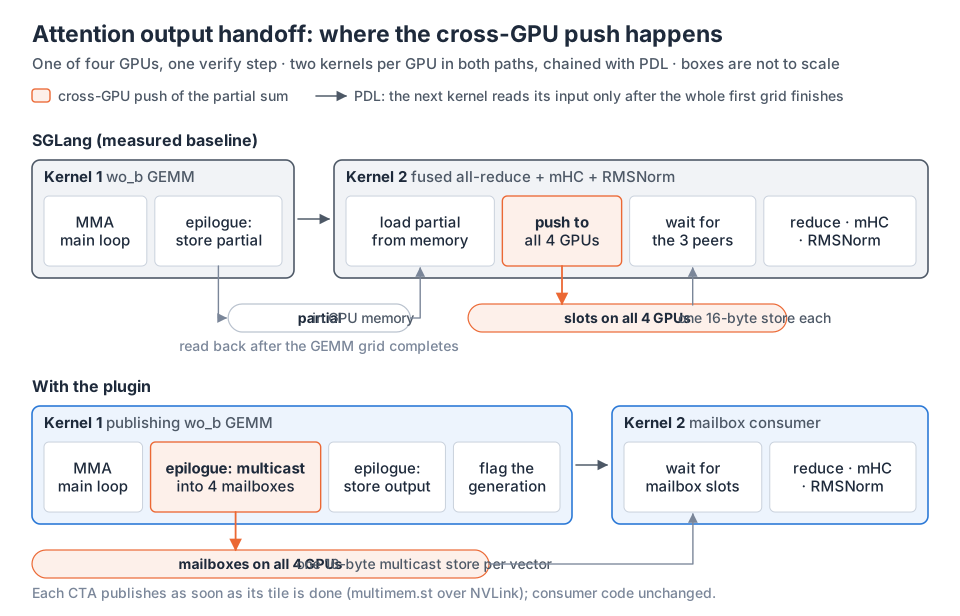
Attention output handoff in SGLang and the NVIDIA plugin for DeepSeek-V4.1-Flash on GB300Measured MoE timeline at one request with and without the NVIDIA plugin

服务结果显示,8K 输入/1K 输出工作负载下,四张 GB300 GPU 上每用户解码速度提升 12–38%。
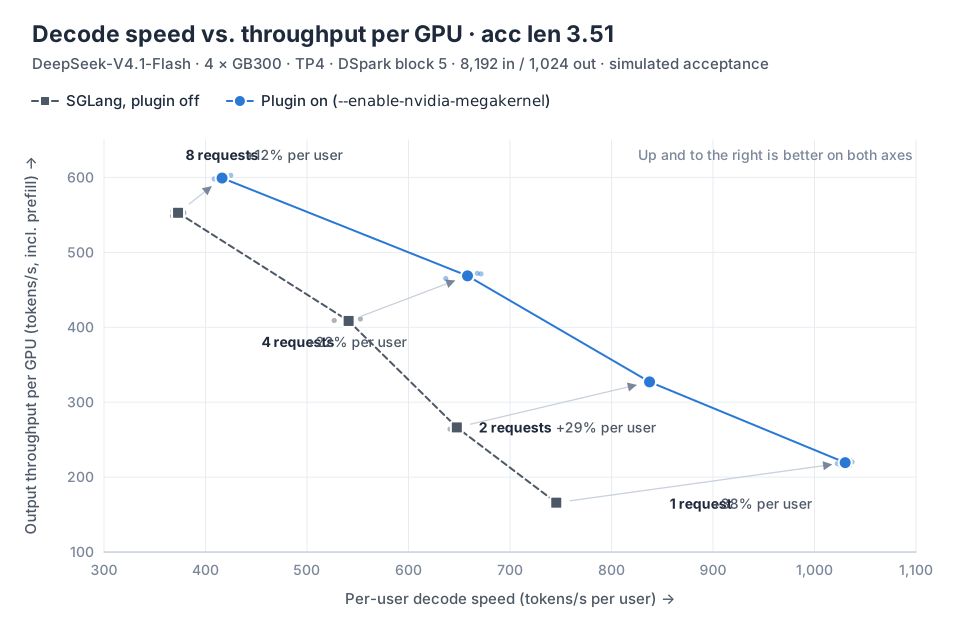
Per-user decode speed versus aggregate output throughput per GPU for DeepSeek-V4.1-Flash on four GB300 GPUs, with and without the NVIDIA plugin

AMD 低延迟内核

AMD 方案将解码器层计算与通信合并为少量持久内核,位于 sgl-amd-mono 仓库。标准路径存在数十个小内核、启动开销和两次全规约停顿,插件用两个 FlyDSL 启动替换,提前加载权重并在计算中重叠通信。
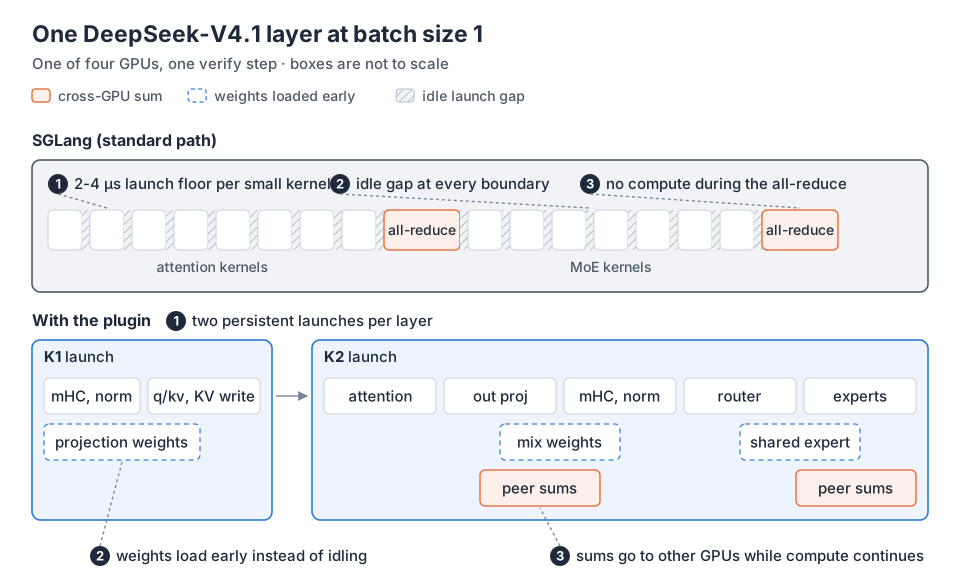
Schematic timeline of one DeepSeek-V4.1 layer at batch size 1. The standard path runs dozens of small kernels with an idle gap at every launch boundary and two all-reduces that stop computation. With the AMD plugin, the layer runs as two FlyDSL launches, K1 and K2, where weights that do not depend on routing load early and partial sums go to peer GPUs while computation continues.

插件系统设计与集成

外部内核库向 SGLang 注册模型规范,系统验证配置、构建插件并分发支持步骤。
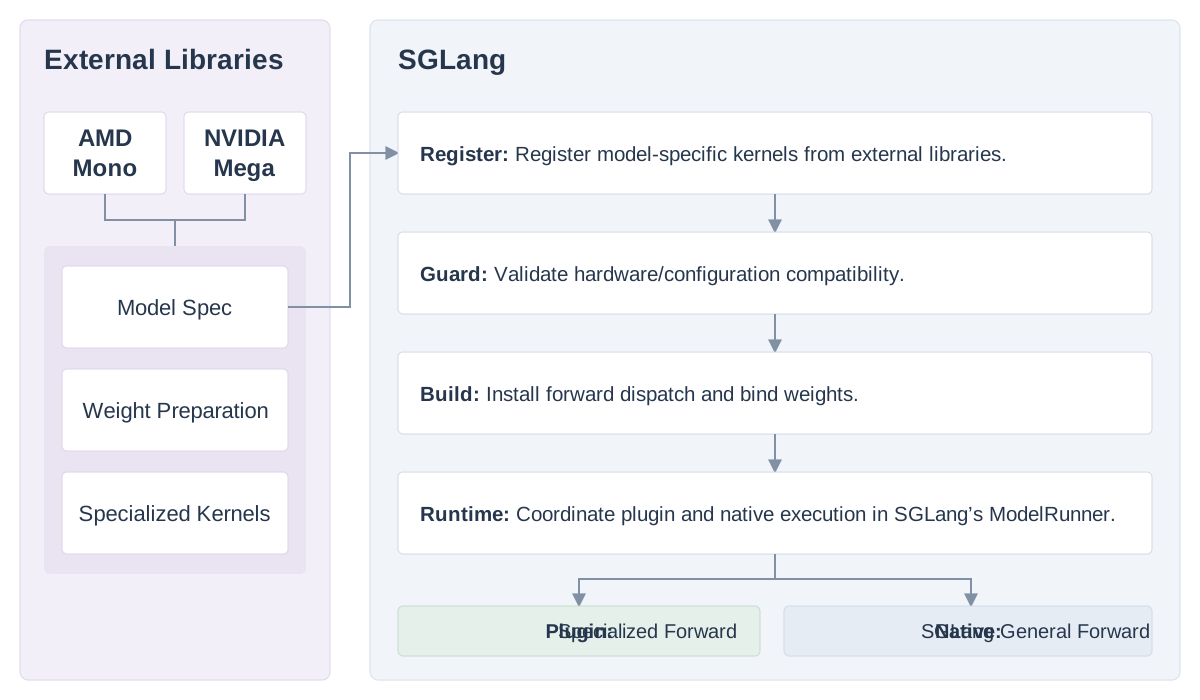
External kernel libraries register model specifications with SGLang, which validates configurations, builds the plugin and dispatches supported steps.

未来计划

团队将继续扩展更多模型与硬件支持,并优化多并发场景下的性能。